FREEPORT’S STORY: OUR WATER
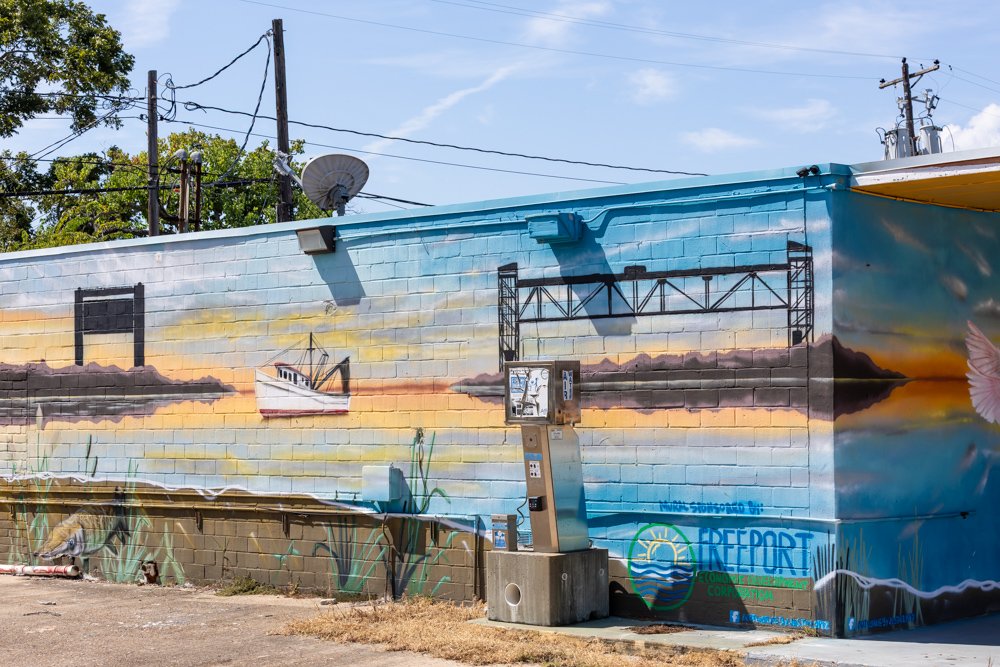
A mural in Freeport, Texas, depicting the boating and water life. Photo credit: BULLARD CENTER
In Freeport, water is not scenery. It is a presence. It shapes how we live, how we work, and how we remember who we are.
This town exists because of water. The Brazos River, one of the longest rivers in Texas, empties into the Gulf just south of here. Oyster Creek winds quietly through neighborhoods and wetlands, feeding into a system of bays, marshes, and estuaries that once sustained entire communities. Long before Freeport was incorporated in 1912, long before the port or the plants, these waters provided food, transportation, and connection. Indigenous peoples lived in relationship with these waterways, understanding their rhythms and respecting their limits.
For generations that followed, the water remained central. Families fished not as a hobby, but as a way of life. Shrimping, crabbing, and oystering were common sights, and for many households, the Gulf and nearby creeks helped put dinner on the table. Children learned to swim early. Summers were spent along the banks, in small boats, or wading knee-deep in familiar places that felt safe and known. The water was something you trusted.
Freeport’s location made it valuable. Deep water access and proximity to the Gulf turned the town into a natural site for shipping and industry. As oil, gas, and petrochemical facilities expanded along the coast, the relationship between the community and its water began to shift. The same waterways that had sustained life and culture became industrial corridors. Channels were dredged. Wetlands were altered or filled. Stormwater runoff and chemical discharges became part of the reality.
This change did not happen overnight, and it did not come without benefits. Industry brought jobs, stability, and economic growth to many families. For decades, the plants and the port were seen as progress, and for good reason. They provided opportunities that allowed people to stay, to raise families, and to build a future in a place they loved.
But coastal communities understand something deeply. When you live close to the water, you see changes quickly. You notice when the fish do not return the way they used to. You notice when the water turns murky after heavy rains, when warning signs go up, when certain areas no longer feel safe for swimming or fishing. You notice when flooding becomes more frequent, when storms hit harder, when the land seems less able to protect itself.
In Freeport, many residents live with a quiet awareness that the water now carries more than tides and memories. It carries the byproducts of industry, the consequences of development, and the weight of decisions made far beyond the shoreline. Yet the story of water in Freeport is not only one of loss. It is also a story of persistence.
Despite everything, people here remain connected to the water. They continue to fish, to boat, to gather near the creeks and the Gulf. They teach their children the same lessons their parents taught them, even as they add new ones about caution and care. Community members advocate for cleaner waterways, stronger protections, and accountability. There is a growing understanding that economic survival and environmental health do not have to exist in opposition, even if history has often forced them that way.
Now it is our time to fight for cleaner creeks, healthier bays, and a future where no one has to choose between making a living and living well. Protecting it means protecting who we are and who we are still becoming.
In Freeport, protecting the water is not an abstract idea. It is about safeguarding a way of life. It is about honoring the generations who depended on these waters and ensuring that future generations can do the same without fear. It is about balance, responsibility, and respect for the natural systems that made this town possible in the first place.
The water built Freeport. It fed it, carried it, and sustained it long before industry arrived. If we listen closely, it is still telling us what it needs.
And like the people of this town, it is resilient, but not invincible. Let’s protect our water.